Blog
How to Register for PAYE as a New UK Employer: Step-by-Step Checklist
Magnolia Roy | 04 August 2026
A step-by-step UK checklist for new employers registering for PAYE with HMRC, including when registration is required, what to prepare, and what to do after you get your employer reference.
How to Register for PAYE as a New UK Employer: Step-by-Step Checklist
Hiring your first employee is a milestone for any UK business. It also brings new payroll responsibilities. If you need to operate PAYE, you must register for PAYE with HMRC before you pay staff, set up payroll correctly, and report pay and deductions on time.
This guide walks new UK employers through when registration is required, how to register, what to prepare, and what to do after HMRC sends your employer PAYE reference number.
What Is PAYE and Why Must New Employers Register?
PAYE (Pay As You Earn) is HMRC’s system for collecting Income Tax and National Insurance from employment. As an employer, you normally operate PAYE as part of payroll.
According to GOV.UK guidance on PAYE for employers, PAYE covers:
- paying your employees
- deducting tax and National Insurance from most employees
- reporting pay and deductions to HMRC
- paying HMRC what you owe, usually every month
Registering as an employer sets up your PAYE scheme so you can meet these obligations legally and on time.
When Must You Register for PAYE?
You do not always need PAYE on day one of running a business. You must register when PAYE rules apply to an employee in the current tax year (since 6 April).
According to GOV.UK, you must register for PAYE if any of the following applies to an employee in the current tax year:
- they are paid £96 or more a week
- they get expenses and company benefits
- they are getting a pension
- they have had another job
- they have received Jobseeker’s Allowance, Employment and Support Allowance, or Incapacity Benefit
You must also register as an employer if you start employing staff or use subcontractors for construction work under CIS. GOV.UK states you must register even if you are only employing yourself, for example as the only director of a limited company.
If none of the PAYE conditions apply, you may not need to register yet, but you should still keep payroll records.
Situation | Do you need to register? |
First employee meets PAYE triggers above | Yes, register before first payday |
Limited company paying only the director as employee | Yes, in most cases |
No employees and no PAYE triggers | Not yet, but keep records |
Using CIS subcontractors | Yes, register as an employer |
Before You Register: What to Prepare
Gathering the right information before you start saves time and reduces errors.
Business and contact details
You will need accurate details about your business, including address, business type, and when you first paid or will pay someone.
First payday date
GOV.UK guidance says you must register before the first payday to get your employer PAYE reference number. You cannot register more than 2 months before you start paying people.
How you plan to run payroll
Decide whether you will:
- run payroll yourself using HMRC-recognised payroll software, or
- outsource payroll to an accountant or payroll provider
You can register as an employer before your software or provider is fully set up, but you need a working payroll process ready for payday.
Employee information for later
You do not need every employee detail to register, but you will need them soon after. For each new employee, collect:
- full name and address
- National Insurance number
- date of birth
- P45 from their previous employer, if they have one
- starter information if no P45 is available
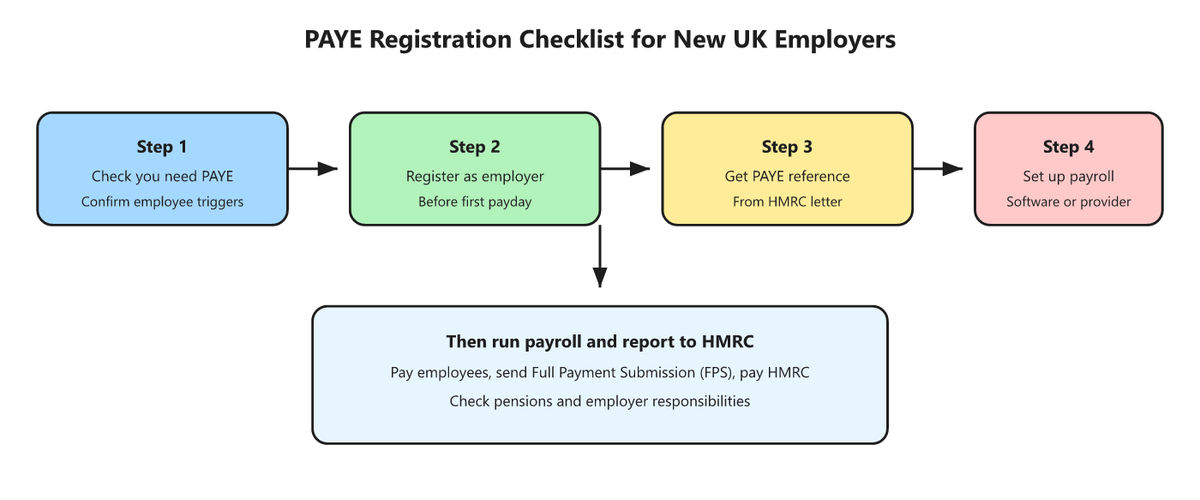
How to Register for PAYE: Step-by-Step Checklist
The checklist below follows the practical order most new UK employers use.
Step 1: Confirm You Need to Register
Review the PAYE triggers for your employee or director situation. If any apply in the current tax year, plan to register before the first payday.
If you are unsure whether someone is an employee, check employment status rules on GOV.UK before registering and running payroll.
Step 2: Register as an Employer with HMRC
Register online using HMRC’s register as an employer service.
Key points from GOV.UK:
- register before the first payday
- you cannot register more than 2 months before you start paying people
- most limited companies with 1 to 9 directors can register online
- you can continue an application if you have already started
If you are using subcontractors for construction work, registration requirements still apply under GOV.UK employer rules.
Step 3: Wait for Your Employer PAYE Reference Number
After registering, HMRC sends your employer PAYE reference number in a letter. You need this for payroll software, HMRC correspondence, and paying PAYE liabilities.
GOV.UK provides guidance on when to expect your registration letter after you apply.
Step 4: Choose How to Run Payroll
Once registered, set up payroll properly. GOV.UK explains that if you operate PAYE, you can choose how to run payroll.
If you run payroll yourself:
- use payroll software that reports PAYE online to HMRC
- check the software can handle payslips, deductions, and reporting you need
If you outsource payroll, share your employer PAYE reference and business details with your provider so they can configure RTI reporting correctly.
Step 5: Check Workplace Pension Duties
Employer registration for PAYE is not the same as pension auto-enrolment setup, but the two often happen together when you hire staff.
Check your pension duties on GOV.UK and The Pensions Regulator when you become an employer. Payroll and pensions should work together from the first eligible employee.
Step 6: Tell HMRC About New Employees at First Payday
When you pay someone, you must tell HMRC about your new employee on or before their first payday. See GOV.UK guidance on running payroll for the tasks due on or before payday, including sending a Full Payment Submission (FPS).
What If You Pay Employees Before Your PAYE Reference Arrives?
Sometimes payroll cannot wait. GOV.UK advises that if you need to pay an employee before you receive your employer PAYE reference number, you should:
- run payroll
- store your Full Payment Submission (FPS)
- send a late Full Payment Submission to HMRC once your scheme is active
Do not ignore reporting because the reference is delayed. Late or missing FPS reports can lead to penalties and cause problems for employees’ benefits.
After Registration: Your Ongoing PAYE Responsibilities
Registration is the start, not the finish. Once your PAYE scheme is live, you need a monthly (or sometimes quarterly) routine.
According to GOV.UK guidance on running payroll, on or before each payday you should:
- record employee pay
- calculate tax, National Insurance, and other deductions
- produce payslips
- send an FPS to HMRC
In the following tax month, you may need to:
- review what you owe HMRC
- send an Employer Payment Summary (EPS) if required
- pay HMRC by the deadline
If you are a small employer expecting to pay less than £1,500 a month, you may be able to arrange quarterly payments. Contact HMRC’s payment enquiry helpline to check.
GOV.UK also warns that HMRC may close your PAYE scheme if you are a new employer and do not send a report to or pay HMRC within 120 days.
Common PAYE Registration Mistakes New UK Employers Make
Leaving Registration Too Late
Register before the first payday. Late registration creates unnecessary stress and can disrupt your first payroll run.
Assuming Directors Are Different
If you are a limited company paying yourself as an employee, you still need to register as an employer in most cases.
Confusing PAYE Registration with Pension Setup
You may need both employer PAYE registration and pension auto-enrolment compliance. Treat them as related but separate tasks.
Choosing Payroll Software That Does Not Fit
Not all software handles your pay frequency, pensions, benefits, or reporting needs. Check features before your first live payroll.
Missing FPS Deadlines After Registration
Getting a PAYE reference is only step one. Every payday needs accurate reporting to HMRC.
DIY Payroll vs Outsourced Payroll for New Employers
DIY payroll software | Outsourced payroll | |
Best for | Simple pay structures, confident owners | Growing teams, limited time, higher compliance risk |
Setup | You register and configure software | Provider helps with registration and setup |
Reporting | You send FPS and pay HMRC | Provider manages RTI and routine filings |
Support | Software helpdesk | Accountant or payroll specialist |
Risk | Easy to miss steps early on | Lower day-to-day error risk |
Many new UK employers register for PAYE themselves but outsource the first payroll runs until processes are stable. Others use a provider from day one for peace of mind.
How AMS Admin Services Can Help
AMS Admin Services helps UK businesses take the complexity out of payroll and employer compliance. If you are hiring your first employee, we can guide you through PAYE registration and set up payroll correctly from the start.
Our payroll and employee services include:
- payroll registration support and employer setup
- monthly payroll processing with RTI submissions
- pension administration and employee record management
- payroll advisory for growing teams
Whether you need help registering for PAYE, running your first payroll, or outsourcing payroll long term, we keep the process clear and compliant.
FAQs
How do I register for PAYE as a new employer?
Register online with HMRC using the register as an employer service before your first payday. HMRC will send your employer PAYE reference number in a letter.
When must I register for PAYE?
You must register if PAYE conditions apply to an employee in the current tax year, such as pay of £96 or more a week, expenses and benefits, pensions, or certain prior employment or benefit history. See GOV.UK PAYE guidance.
Do I need to register for PAYE if I am the only director?
Yes. GOV.UK states you must register even if you are only employing yourself, for example as the only director of a limited company.
How long does PAYE registration take?
HMRC sends your employer PAYE reference in a letter after you register. GOV.UK explains you can check when to expect correspondence about your registration after applying.
Can I register for PAYE before I hire someone?
You cannot register more than 2 months before you start paying people. Register before the first payday, not months in advance without a start date.
What do I need before registering for PAYE?
You need business details, your expected first payday, and a plan for how you will run payroll. Employee personal details are required soon after registration when you run the first payroll.
What happens if I pay employees before getting my PAYE reference?
Run payroll, store your FPS, and send a late FPS to HMRC once your scheme is active, as explained on GOV.UK.
Can AMS register for PAYE on my behalf?
AMS can support payroll registration and employer setup as part of our payroll services. Contact us for help with PAYE registration and ongoing payroll processing.
Final Thoughts
Registering for PAYE is one of the first compliance steps for a new UK employer. The process is straightforward when you know the triggers, register before payday, and have payroll ready to report to HMRC from day one.
If you want practical help with PAYE registration, payroll setup, or monthly RTI reporting, AMS Admin Services is here to help. Book a free consultation and get your first payroll right from the start.