Blog
Step-by-Step Guide to Claiming Tax Reliefs as an SME
Yashi Shrivastav | 24 October 2025
Most UK SMEs miss out on thousands in unclaimed tax reliefs every year. From R&D credits to Full Expensing, these incentives can cut your tax bill and boost your cash flow. Discover how to claim them step-by-step, before HMRC deadlines close the window.

The difference between paying tax and saving tax is how well you plan ahead.
If you’re running a growing business, you already know how tight margins can feel. But what many founders overlook is that tax reliefs are one of the most reliable ways to free up cash without cutting costs or chasing new sales.
These reliefs aren’t just for big corporations or tech startups. They exist to reward every UK SME that invests, hires, or innovates. The real difference lies in how you plan and record your finances.
This guide breaks down the process the way accountants actually do it, step by step, from setup to submission, so you can claim confidently, stay compliant, and make your cash work harder.
Understand What Tax Reliefs Means
Tax reliefs let you keep more profit by paying less tax. In simple terms, it’s a deduction, allowance, or credit that reduces the tax your company owes.
Some reliefs reduce taxable profit, while others directly lower the tax due. Both matter, but they work differently, which is why accurate records and correct classifications are key.
Before making a big purchase or starting a new project, ask:
“Does this qualify for tax relief?”
That single question turns financial decisions into tax-smart ones. Over time, it builds a habit that separates reactive record-keeping from proactive financial planning.
You may also like: Tax Avoidance - Don’t Get Caught Out!
Step 1: Build a Record-Keeping System That Works
Accurate, consistent records make claiming tax relief straightforward. They also show HMRC that your claim is based on reliable information.
Here’s how to set up your foundation:
- Create clear categories in your chart of accounts: In your accounting software, use separate codes for R&D costs, capital purchases, and professional fees. This makes qualifying expenses easy to identify later.
- Attach evidence to every transaction: Keep invoices, contracts, and notes linked to each record. HMRC expects claims to be supported by proof that the costs were business-related.
- Review regularly: A short monthly or quarterly check helps confirm that entries are coded correctly and all supporting documents are attached.
Good bookkeeping saves time, reduces errors, and builds confidence in every claim you submit.
You may also like: Bookkeeping and Taxes: When to Pass the Torch?
Step 2: Identify the Reliefs That Apply to Your SME
UK SMEs can benefit from a range of tax reliefs depending on their activities and investments. Knowing which ones apply helps you plan effectively.
Relief | Purpose | What to Track |
R&D Tax Relief | For companies developing new products, processes, or technology | Staff time, materials, subcontractor invoices, prototypes |
Annual Investment Allowance (AIA) | For equipment, machinery, or IT assets used in your business | Invoices, asset register, date of purchase |
Employment Allowance | For reducing Employer National Insurance contributions | Payroll records, eligibility confirmation |
Patent Box Relief | For companies earning income from patented products | Patent documentation, related income records |
Full Expensing (from April 2023) | For capital investment in qualifying equipment | Asset ownership details, use within UK trade |
Creative Industry Reliefs | For qualifying film, media, or video game projects | Production costs, contracts, staff payments |
Eligibility depends on HMRC criteria, so it’s important to keep your accounting information structured and up to date.
Step 3: Calculate Your Claim with Confidence
When your records are clear, calculating your tax relief becomes a logical process.
Follow these key steps:
- Reconcile all accounts to confirm income and expenses are correctly coded.
- Remove disallowed costs such as entertainment or personal expenses.
- Apply the relevant relief using current HMRC guidance. For example, qualifying R&D costs can be enhanced by 86%.
- Cross-check totals to make sure your calculations align with your corporation tax return (CT600) and supporting accounts.
Taking a structured, consistent approach protects you from errors and ensures your claims are fully supported if HMRC reviews them.
You may also like: Your Tax Questions Answered
Step 4: File on Time and Stay Organised
Most tax reliefs are claimed through your annual corporation tax return. If your financial year ends on 31 March 2024, your claim deadline is 31 March 2026.
Before submitting, run through this quick checklist:
- Review figures for accuracy and alignment with your accounts.
- Prepare a short explanation for R&D or similar claims describing the project and outcome.
- Store all evidence and calculations in a single folder for easy access.
- File through HMRC’s online system or your accounting software.
Submitting a clear, well-supported claim gives you peace of mind and avoids delays in processing.
You may also like: Freelance Tax Guide: How to File and Pay
Step 5: Plan Ahead for Future Claims
Tax reliefs are most effective when planned in advance. Integrating them into your regular financial process ensures you never miss an opportunity.
Ways to stay prepared:
- Review current projects and highlight areas that may qualify.
- Record costs in real time within your accounting system.
- Schedule periodic reviews with your accountant to confirm eligibility.
- Include potential reliefs in your cash flow forecasts to understand their impact on future budgets.
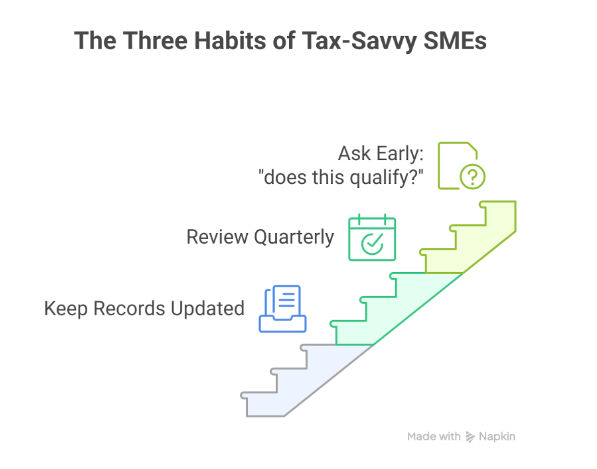
Planning in this way turns tax relief from a year-end task into part of your ongoing financial strategy.
Frequently Asked Questions
Q: What tax reliefs can UK SMEs claim?
The main reliefs available include R&D Tax Relief, Annual Investment Allowance (AIA), Employment Allowance, Patent Box, and Full Expensing. Each rewards different types of activity, from innovation to hiring or investing in equipment. Reviewing your projects regularly helps you identify which ones apply.
Q: Can I claim tax relief on projects that didn’t work?
Yes. If your R&D project aimed to solve a technical or scientific problem, you can still claim even if it didn’t succeed. HMRC values the attempt to innovate, not just the outcome, as long as you keep records of what was tried and why.
Q: What records should I keep for a tax relief claim?
Keep invoices, staff timesheets, payroll data, contracts, and project notes linked directly to your accounting entries. HMRC checks how well you can evidence your spending, so organised records make claims smoother and more reliable.
Takeaway
Tax reliefs are designed to encourage UK businesses to invest, innovate, and grow. With the right structure in place, they can become a reliable source of savings that strengthen your business year after year. Clear records, consistent reviews, and thoughtful planning will always put you in a stronger financial position.
If you want the peace of mind that every eligible claim is identified, documented, and compliant, AMS is here to help. Our experienced team supports small businesses with accurate accounting, timely submissions, and practical SME tax planning that keeps you compliant and confident with HMRC.
Start with a free consultation today to review your current setup and identify where your business could be saving more.